Moment of the Sun in the Shadow

When we don't see the negative
appearance of within,
the reason for being narsistic
or be wild goer,
while the cells shrink.
The reflection in the mirror or
still water points to

what we miss to see;
how we correct the wrong;
the mind, the real us;
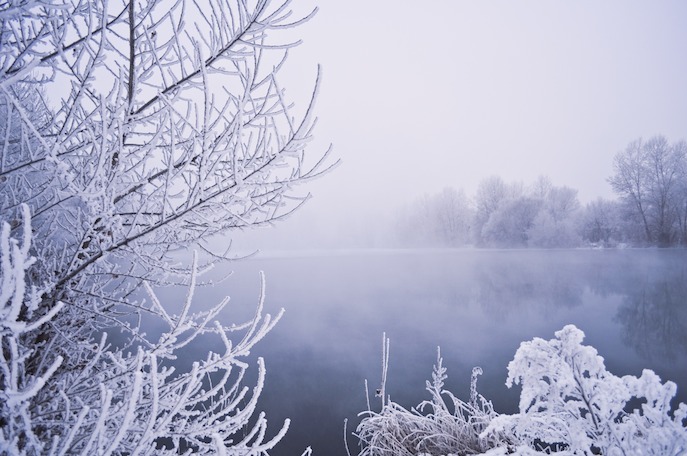
where the dark lake turns clear to mirror
the blue sky and the clouds; where
the snake can be morphed and born a sainthood;
or the moment of the sun in the shadow;
if only we could grab it safe,
the gay youth, full of dreams,
would've grown to reach the peak.

©Byung A. Fallgren

Matthew Shepard, who was gay, died in October 1998
after two men beat him and left him tied to a fence
on a plot of land outside Laramie, where he was
attending the University of Wyoming.  Today,
a portrait honoring the life of Matthew Shepard is
on display at the Washinton D.C.
Perspective
Winter Blue Remedy Song
Winter Blue Remedy Song

As a remedy we tend to
think of the ones shivering
in the cold, in the land near and far,

while the senile ones on the top
play the game of war.

Another winter blues, the one you can see
             in the dying plants;
             in the tears of a mother;
             in the shudder of the moon; remedy

yet to be found;
hidden in the bottom of
the conscience, gem in the rock;
             wish it points to the light.


©Byung A. Fallgren
Night
Night

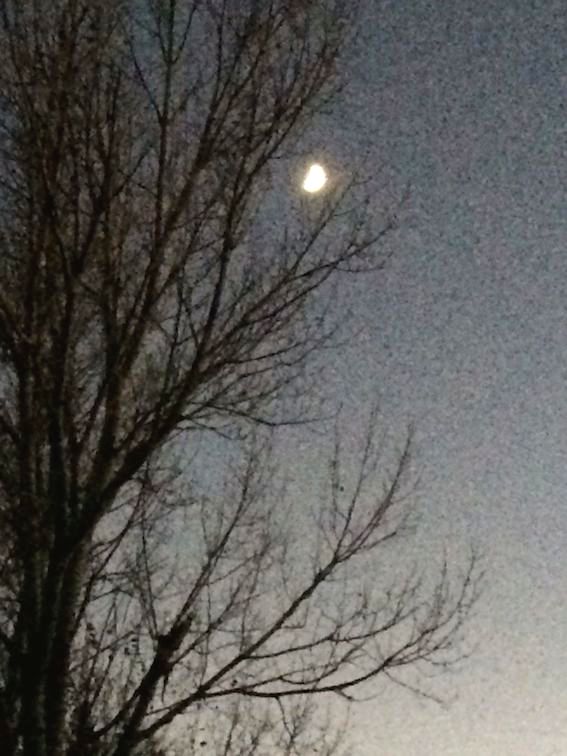
Winter night
his snore keeps her reflect
on the past blue;

the refugee
the rain gutter recites
the war poem;

lighted window
the night rain drums
in November;

artic dream
polar bear dreams of
old ice home.

©Byung A. Fallgren
The sister, one of the two fingers
The Sister, one of the two fingers

Her eyes see things others don't
when it comes to her bro.
when she catches his post on the Facebook
about his past surgery as if recent one
and his worry on the hospital bill,
her senses go purple alert; halt her impulse
to send him a check, give her mom a call
to make sure if he'd do that.
Mom says it must be a hacker.
she'd call her brother for sure.

Mom's heart blooms: she knew
two fingers are better than one,
like a nation needs ally.

--Byung A.
Keeping her safe
Keeping her safe

As the sea rise with the global warm
The villages grow skyward?
Tall and wind-ridden? but away

From iron grab of angry ocean.
The vulnerable woman we neglected.
Memory of yester years, dreaming

To go back to her
Of yester years. Is it too late?
Why not keep her safe now?

*

unbelieving or selfishness
everywhere signs of global warming
but smokestacks still emit CO2


©Byung A. Fallgren
in some Assuming
in some Assuming

once been a fiction writer, some think
her poems are lies, with horror and thrill and all.
"It must be some fiction trying to..." they'd jeer.

She smiles then shudder at the imprudence
of it, then with pity, jokes, "Probably you are
right." then shrugs. Nevertheless,

she examines her poetry; sees it as true and
hurried as the impatient dame herself.
only needs to morph more.

"Assume all you might," she whispers them, "but
know that, in doing so, you lose your empathy
and quality of word; what a waste.

"That's how we lost each other, long ago,
on the green hill, on a balmy, dazed day.
what follows: years of tossing at night in doubt."


(c) Byung A. Fallgren
The Mother and Daughter, like lunar eclipse
The Mother and Daughter, like lunar eclipse

The daughter who is born writer
doesn't write and tells her mom to write,
like the mom used to tell her. Now,
her mom has become the daughter's youthhood.
She's the daughter is the mom is the daughter...
the mom would do it for the daughter,
like the daughter should've done it for the mom;

they are two in one.
Who would've guessed it?
Not the Earth, nor the moon.


(c) Byung A. Fallgren
Attraction
Anticipation

magpies
hover over
the ash
as a homeless man
waits for good news


Attraction

in the pile
of wrapping papers
and old ornaments
a terry bear
still sings


(c)Byung A. Fallgren
Lines Written During my Second Pandemic
Lines Written During my Second Pandemic
Eduardo Corral

All water flows toward loneliness.
Loneliness is a black eye, a gleaming pit,
we have yet to split loneliness like an atom.
Loneliness arrives on a leash of scorpions.
In my scull, loneliness opens like a parachute.

It's illegal to chain loneliness to a fence.
Flickers tunnel though loneliness to build nests

I sprinkle a spoon of sugar over loneliness.
In some languages, loneliness is imperfect.
Antlers crown the bald head of loneliness.
Like rough trade, loneliness won it kiss you.
Loneliness crouched in a tree afraid of dirt.

In the dark, loneness ripens too quickly.
Beneath the roof of loneliness, my blood drifts.


Eduardo C. Corral is the son of Mexican immigrants, the author of
Guillotine (Gray wolf Press, 2020), his work has been supported
by fellowship from the Guggenheim Foundation and the
Lannan Foundation. He lives in Raleigh, North Carolina.
The Lesson on the Trail
The Lesson on the Trail

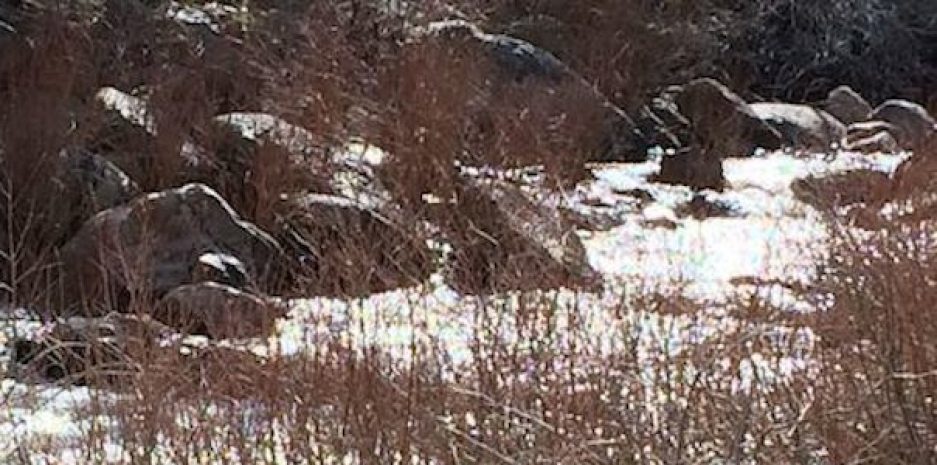
The brilliant red leaves of the shrub
shrugs off the snow, like a stubborn child
of Mother tucks it under the blanket.

the lodgepoles in the white coat
toss the snows at the passerby, as if warning.
Feeling it, I turn my head but see none,
not even him; move along the trail, indulging in
the peace. yet hear a sound in the no sound,
feel an eye in the no eye zone.
there, it groans; I turn back and meet it.

the mountain lion on the boulder on the slope,
hungry, fierce eyes. I froze, then slowly
pick up the big stick, mistake. It jumps off
the boulder and slinks toward me.

toward...the hare playing a statue.
I run to the car, inside it, I see
the beast chases the hare into the
dense woods that whisper,

whatever it is, I only wish for
the hare home safe. and so, do I.

(c)Byung A. Fallgren
 Byung A. Fallgren