On Desire
Dujie Tahat

A firm hand. The shadow waves of satin.
I am not yet flesh. He calls me baby,
and I touch my face. I'm searching for god
when I oil my body in the mirror. To love it
mean to love a man mean an opening
to another man. When I take my glasses off
all the lines blur. A body is a body without
language, I tell my girlfriend and she laughs,
mouth wide enough to hide in. she shows me
my soft parts. I dissolve into what. I forget
hiding also means a good beating, the way
passion can be suffering. I can't believe
my whole life I never touched what made me
holy. We have bread, butter and nowhere to be.

Dujie Tahat is the author of "Here I am O my God"
(Poets' Society of America, 2020), selected for a
Poetry Society of America Chapbook Fellowship,
Salat (Tupelo 2020), winner of the Tupelo Press
Summer Garden Chapbook Award.
Poetry
The Window in the Corner
The Window in the Corner

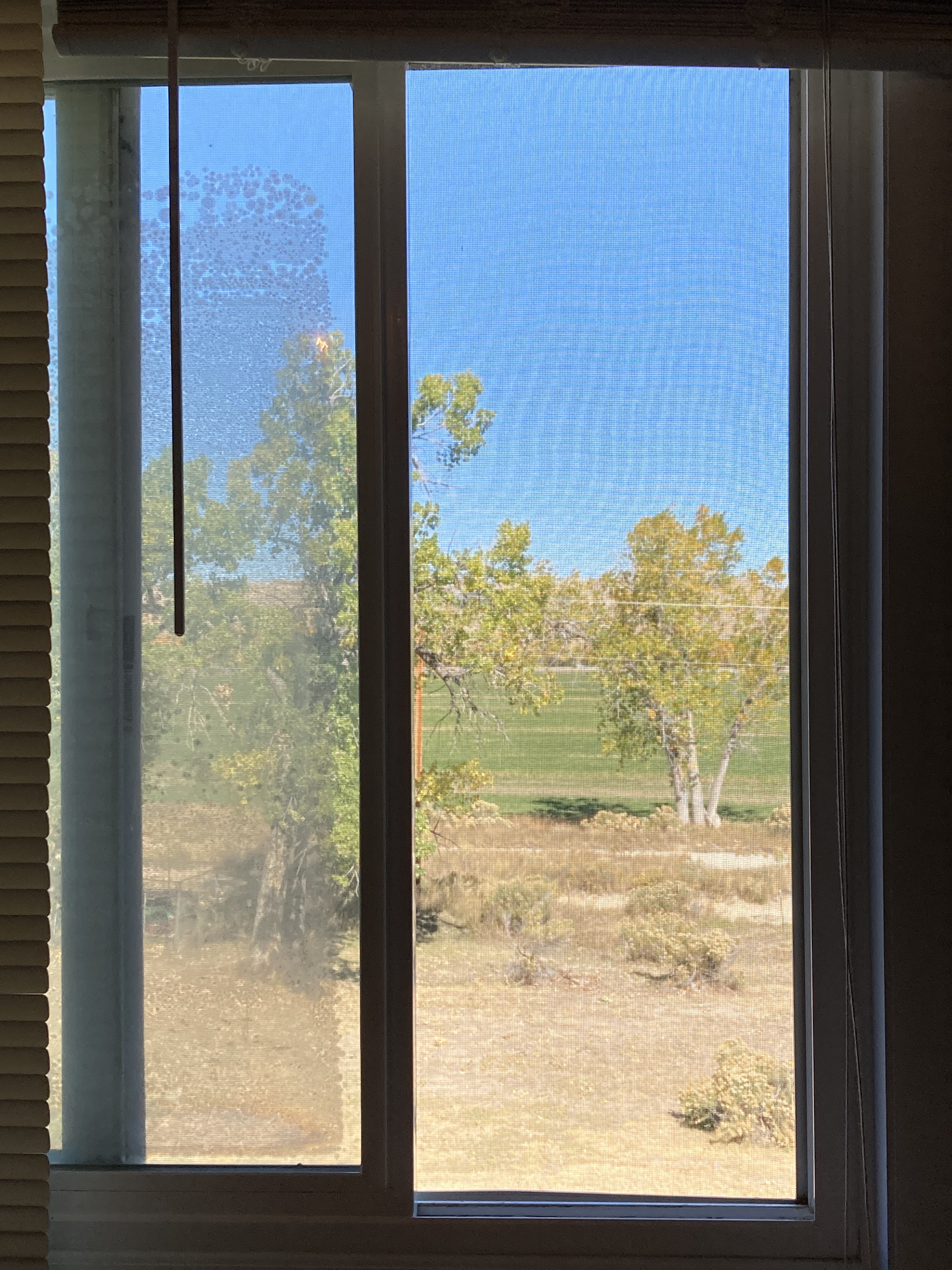
Usually, it is hidden behind the blinder,
for the funguses blooming between
the panes--guilty one, jealous or lazy soul,
with no way of purge it;
but when opened the blinder
it provides an excellent view of the
pasture in all seasons--a person
with a lot of potential,

like the unfinished
project in a box in the dark basement
deemed to be silver, if not a little piece
of your dream.

So, why not banish the blinder?
because...

the blinder winks;
fungus, like the man who
would have been there; what can I say?


(c)Byung A. Fallgren
What life does, is this
What life does, is this

While driving outskirt of town
to check on a friend in distress,
I saw in rearview mirror a patrol car,
lights flashing, follows me.
pulled over, wondering what I did wrong.

Show me the license, ma'am, he said.
I did.
You did over speed, he said. Where were
you going?
To a friend of mine grieving for her
parents who died in recent hurricane.

I'm sorry, he went on, but you are fined
a hundred dollar or more.
I winced.
Considering your clean record, I'll just
give you a warning. Next time, you must pay.
I thanked him.

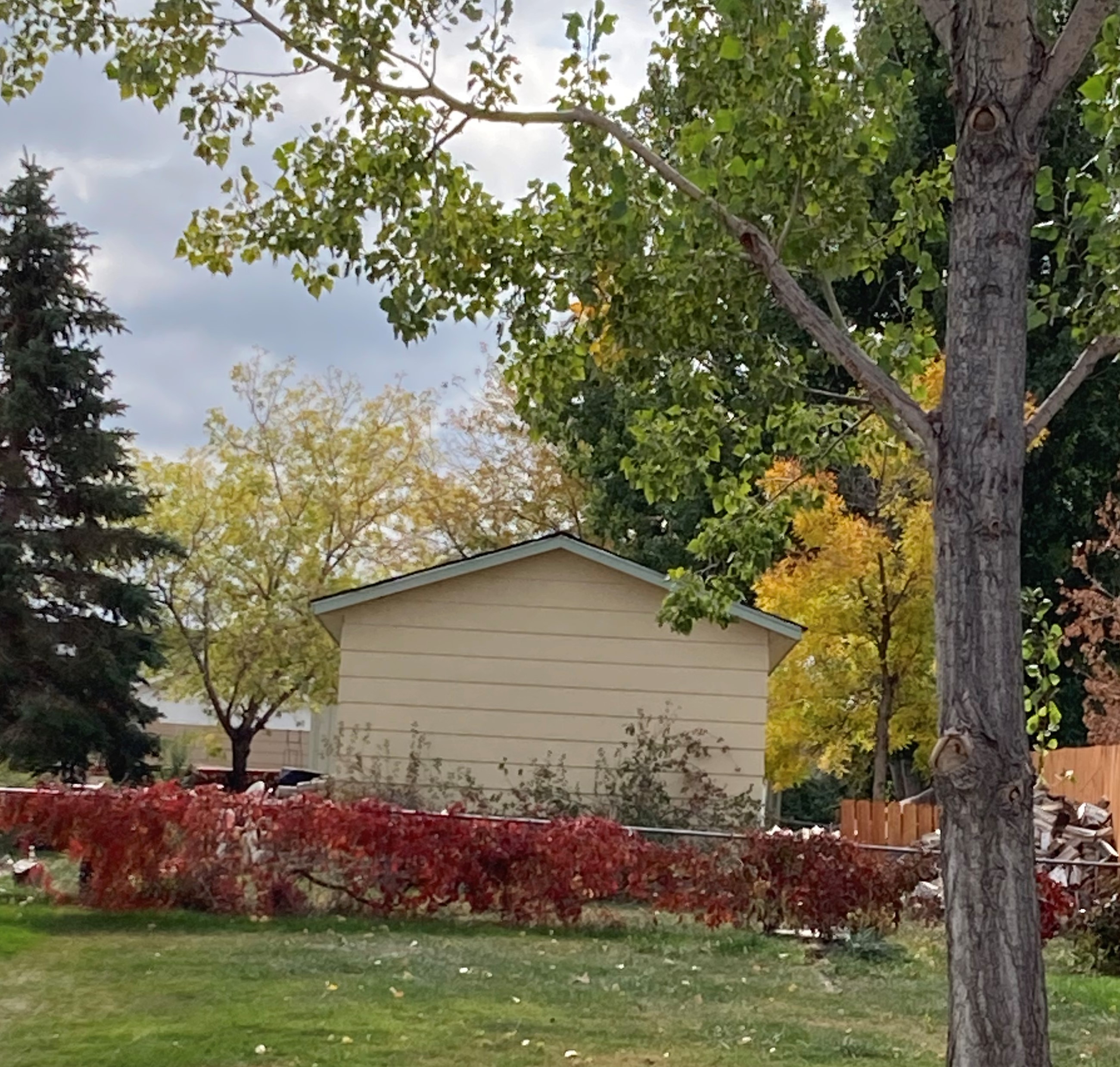
Continuing on my way, I was surprised
by the trees in oranges, gold and red,
in just a week; they changed from a few tints
of the end of summer to the deep autumn,
full display of the beauty of the season.

The small luck of the day and the warning of the officer;
the retirees who quickly vanished from the golden age;
like October trees signaling for the inevitable winter;
winter, the time of respite and restoration for spring;

this is what life does; teacher of how all that can be better
with some flashlight, like the warning of the cop.

(c) Byung A. Fallgren
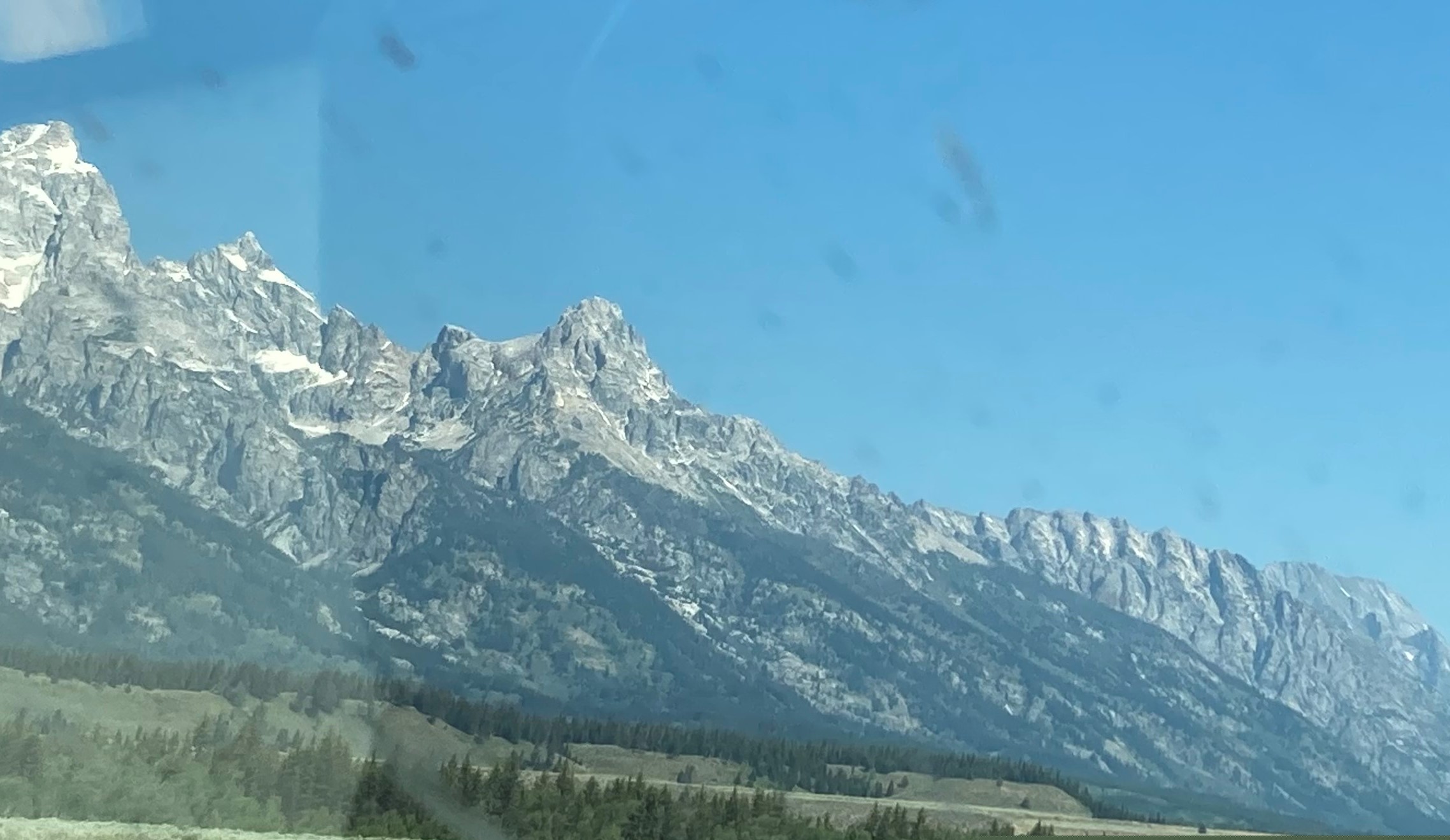
Grand Teton, overdone praise or not
Grand Teton, overdone praise or not

From the pathway, you weren't
as grand as I thought you would be
like some twisted opinion of truth.

Looking back, your peaks show
the different side of you:
hidden valley in the dark shadow;
seems to harbor the grandeur;
the narrow, steep ridge
twisted and crawls up toward the top, with
young man's ardent ambition; persists
to uncover the unseen;
the reason for cry in the world of darkness,

with endless dream of king;
wish to turn around to see the whole,
with a fresh eye, to meet you, real you.

©Byung A. Fallgren
Perhaps the World End Here
Perhaps the World Ends Here
Joy Harjo (1951--)

The world begins at a kitchen table. No matter
     what, we must eat to live.

The gifts of earth are brought and prepared, set
     on the table. So it has been since creation,
     and it will go on.

We chase chickens and dogs away from it. Babies
     teethe at the corners. They scrape their
     knees under it.

It is here that chickens are given instructions on
     what it means to be human. We make men at
it, we make women.

At this table we gossip, recall enemies and the
     ghosts of lovers.

Our dreams drink coffee with us as they put
     their arms around our children. The laugh
     with us at our poor falling-down selves and as
     we put ourselves back together once again at
     the table.

This table has been a house in the rain, an
     umbrella in the sun.

We have begun and ended at the table. It is a
     place to hide in the shadow of terror. A place
     to celebrate the terrible victory.

We have given birth on this table, and have
     prepared our parents for burial here.
 At this table we sing with joy, with sorrow, we
     pray of suffering and remorse. We give
     thanks.

Perhaps the world will end at the kitchen table,
     while we are laughing and crying, eating of
     the last sweet bite.

Joy Harjo was appointed the new United States poet laureate
in 2019. Born in Tusa Oklahoma in 1951. She is a member of the
Musoke/Creek Nation.
Light at the Edge
Light at the Edge

Her fingers tap dance around the mound,
starting at the little round button at the center,
the ritual done each month for decades.
The mound and the button lost
their youthful bounce; still tricky;
the tiny lump comes and go at the touch,
fooling the serious fingers.

You need an Ultrasound on that spot,
says the x-ray technician.
Lying on the table as the woman examines
to catch the illusive devil, she crosses her fingers.

As her heartbeat quickens, the devil floats above
the table, grinning. Time for you to go.
She shut her eyes. Not yet, I still have lot of things to do!

Wait here, the woman tells her. I'll be back with the result.
She feels her mouth dry like been dead for days.

The woman returns with stiff face.
Her heart sinks to the floor.
We do not find anything scary, the woman says.
a long sigh of relief escapes from her. Thanks.

 ©Byung A. Fallgren

Curious and Counting
Curious and Counting
  Arisa White

How do I get in your atmosphere?
Tell me about your sign, look me planetarily
--those Venuses in your eyes?

There was no thought after you
and I wrote it down. Wandered
to the wailing with my back exposed.

My kind of Sunday, your knees
buffalo and kicking up plains.
We go sockless for beauty.

Ribbons unwind bring us to tied,
I'm at your symmetry, remembering
all your digits and your lucky number mine.

Arisa White is a Cave Canem poet whose works
is rooted in black women way of knowing. The author
of Who's Your Daddy (Augury Books, 2021) among
other titles. She is an assistant professor of
Singlish and creative writing at Cole College.
At the Apple Orchard
At the Apple Orchard

We came from the city
to pick the apples, green, red and gold,
to fill our lungs with the scent of the fruits,
even the hidden worm-ridden scent
is better than the city air;

we came to be surrounded by the atmosphere
of the shared goal--to be ripen, ripen only;
oh, that mature spirit!
wish to drown in it all day long, forever more.

We fill our baskets with
many hues and aromas,
but only one shared goal,
to take home;
to mix them with our daily lives,
to bake pies that bloom in our hearts.

©Byung A. Fallgren

Moaning of Moon
My two poems, Moaning of Moon and Unprecedented, flood have been
accepted for Fall printed issue of the Avocet, journal of Nature poetry.
Thank you, Charles and Vivian for accepting these pieces.
Late August Morning
Late August Morning

Touch of the wind lost
the summer's heat;
older man's coolness,
yet the cotton leaves dance
in the reverie of yesterdays.

North wind, precursor
of the snowman that
ignores the laughs of
the dancing leaves;
scheme for the October.

©Byung A. Fallgren
 Byung A. Fallgren