Coyote Sees Himself in Water
  Tracy M, Atsitty

Averts his gaze: nare & lore, a body;
of water braded into itself: bone
of herring, its blackness among the bone
white rush plunge against his bare body,

wind up (upstroke) cascades a woman's body.

coyote grows tethers over keel bone,
thrusting, as if to buoy gently--blown
over himself, prone to leave the body

he embraced. No, there is no beauty here!
Estuary of thick mutter and honk,
up close: water, herring, & wind blow bare,
gnat embedded in matted feathers. Here--


Tracy M. Atsitty is the author of Rain Scald
(University of New Mexico Press, 2018).  She
is a PhD student in the creative writing program
at Florida State University in Tallahassee, where
she lives.
Uncategorized
Even the Leaves
Even the leaves

While most of them
ramble round the yard
or blown away
like aimless souls,
some settle
in the window well;
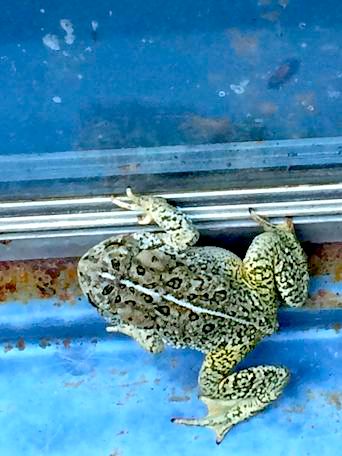
visit the salamander and toad
hidden in their holes wide open;

the leaves hide the doors under their wings;
the finders of weak and helpless.
they welcome snow, meditate
beneath it, all winter long,
slowly fade till next spring.


©Byung A. Fallgren

The Weekly Avocet
Senryu (on health)
Senryu (on health)

some hereditary disease
or condition as obesity can be controlled
evasive will-power

after a long thought
ordered a bottle of weight-loss
worthless to the food-lover

TB positive
doesn't mean sick-guaranteed
only one-in-ten fall

*Person with TB positive (tuberculosis) doesn't infect others,
unless she or he is sick. Not everyone with TB positive ends up
getting sick, a doctor says. Only one-in-ten does.
Health professionals say when a person with TB positive's immune
is low he or she can fall sick with TB.
In my observation, low immune system doesn't always trigger
the disease. Some people with TB positive never get sick, even when their
immune system is low. They don't know exactly why.
So, I believe only one-in-ten people with TB positive get sick. Again,
no one knows the reason. They only guess some people's lung's wall is
so strong that the bacteria cannot penetrate it.

--Byung A.
January, Mother’s temper
January, Mother's temper

Twenty-five below zero has brought

six-inch snow;

was only days ago, days later,

it rains;

thirty-seven degrees, warm breath of

impatient spring.

Who says only human can display uneven temper;
Mother startles us with hers. We only pray
she plays benign. Or should we say we
check on our habit provoking her; we've done enough.

Listen to the cracking, artic ice in the January rain;

sea of the jagged pieces ice; bleeding polar bear.

The red setting sun shudders; echoes in our heart.
We whisper to the sun: we try hard.
January rain sobs, silent cry;
we listen, listen more.

Mother begs: dig out the muscle in the cove
of your heart.

©Byung A. Fallgren
The Weekly Avocet
Good news: anyone interested in subscribing The Weekly Avocet, please contact, cportolano@hotmail.com. It’s free!
Four Haiku
Four Haiku

in the mirror
I see an old monkey
time is wicked

daydream all day
writing in the evening
tonight, lost sleep

feeling guilt
writhing on the couch all day
old habit no more

clouds talk to each other
see the snow down there on earth
job done for today


©Byung A. Fallgren
Fate of the Daogi, and others
Fate of the Daogi, and others

In my childhood, I used to hear at night
the bird call: daok, daok. Low, intense cry.
I slipped out of the bed to the hall, stared
toward the dark wood. No bird call,
but a light swam in the black lake
of the night forest.

Trees vanished into the new houses.
I heard Daogi no more.

Light swam in the dark lake of the night.


©Byung A. Fallgren
The Weekly Avocet
Old year you must not…
from The Death of the Old Year, the poem by Alfred, Lord Tennyson

"Old year you must not go;
  So long you have been with us,
  Such joy as you have seen with us,
  Old year you shall not go."

As I was reading The Death of the Old Year, by Tennyson,
I was attracted especially by the above stanza of the poem.
With what has been happening in the world, I'd feel quite
the opposite; I am glad to say goodby to the old year.
Maybe, I'm not alone. However, I was stricken by the tenderness
and warmth of the old poet's view. And I thought: why not?

  (Alfred Tennyson was born on August 6, 1809, in England, died
on October 6, 1892. Many of his poems are among the best known
in the English language.)
 Byung A. Fallgren