At the Arts & Crafts store before Christmas

hustle and bustle
of the people
to buy the ornaments
as if wishing
the magic tree

colorful balls
crammed in the clear bag
look at the shoppers,
wondering if rainbow spirit
is finally blooming

at the artificial flowers' shelves
blooming four seasons
arranged neat and gorgeous
with absence of scents
like empty beauty pageant


©Byung A. Fallgren
The Weekly Avocet
Early Morning , My Birthday
Rain
by Mary Oliver

4
Early Morning, My Birthday

The snails on the pink sleds of this bodies are moving
    among the morning glories.
The spider is asleep among the red thumbs
   of the raspberries.
What shall I do, what shall I do?

The rain is slow.
The little birds are alive in it.
Even the beetles.
The green leaves lap it up.
What shall I do, what shall I do?
The wasp sits on the porch of her paper castle.
The blue heron floats out of the clouds.
The fish leap, all rainbow and smooth, from the dark water.

This morning the water lilies are no less lovely, I think,
   than the lilies of Monet.

And I do not want any more to be useful, to be docile,
to lead children out of the fields into the text
of civility, to teach them that they are (they are not) better
   than the grass.

Mary Oliver won the Pulitzer Prize in 1984 and the National Book
Award in 1992. She is meditative poet, intent on capturing and
celebrating the vitality of nature, aware meanwhile of
mortal limits.
Moment of the Sun in the Shadow
Moment of the Sun in the Shadow

When we don't see the negative
appearance of within,
the reason for being narsistic
or be wild goer,
while the cells shrink.
The reflection in the mirror or
still water points to

what we miss to see;
how we correct the wrong;
the mind, the real us;
where the dark lake turns clear to mirror
the blue sky and the clouds; where
the snake can be morphed and born a sainthood;
or the moment of the sun in the shadow;
if only we could grab it safe,
the gay youth, full of dreams,
would've grown to reach the peak.

©Byung A. Fallgren

Matthew Shepard, who was gay, died in October 1998
after two men beat him and left him tied to a fence
on a plot of land outside Laramie, where he was
attending the University of Wyoming.  Today,
a portrait honoring the life of Matthew Shepard is
on display at the Washinton D.C.
The Weekly Avocet
The aim was song
The Aim was Song
Robet Frost--March 26, 1874--January 29, 1963

Before man came to blow it right
   The wind once blew itself untaught,
And did its loudest day and night
   In any rough place where it caught.

Man came to tell it what was wrong:
   It hadn't found the place to blow;
It blew too hard--the aim was song.
   And listen --how it ought to go!

He took a little in his mouth,
   And held it long enough for north
To be converted into south,
   And then by measure blew it forth.

By measure. It was word and note,
   The wind the wind had meant to be--
A little through the lips and throat.
   The aim was song--the wind could see.

The Aim was Song was first published in The Measure:
A Journal of Poetry Vol. 1, no. 1, March 1921, and later
appeared in Robert Frost's collection, New Hampshire,
Henry Holt & Company, in 1923. Mark Richardson,
professor of English at Doshisha University in
Kyoto, writes in The Ordeal of Robert Frost: The Poet
and his poetics that "through us nature excess itself
in form, Frost says, and brings us to the place where
nature evolves into culture, where chaos resolves itself
through human agency into something "created" orderly.
The Wind is articulated or measured out in speech, and
not only into speech, but song--poetry.
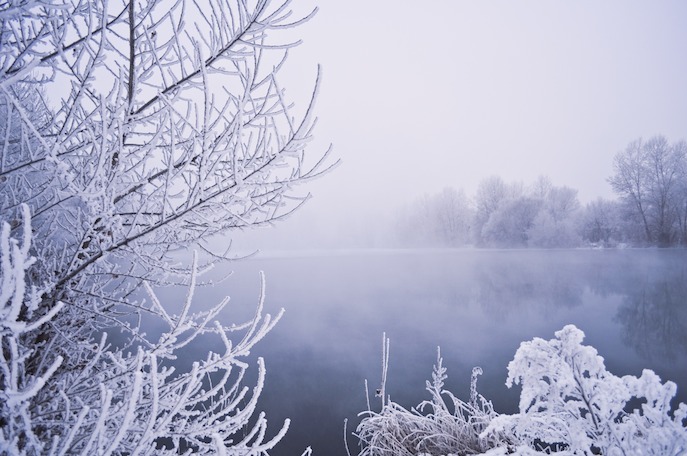
Winter Blue Remedy Song
Winter Blue Remedy Song

As a remedy we tend to
think of the ones shivering
in the cold, in the land near and far,

while the senile ones on the top
play the game of war.

Another winter blues, the one you can see
             in the dying plants;
             in the tears of a mother;
             in the shudder of the moon; remedy

yet to be found;
hidden in the bottom of
the conscience, gem in the rock;
             wish it points to the light.


©Byung A. Fallgren
The Weekly Avocet
Winter and The Lesson on the Trail
My poems Winter and Lesson on the Trail have been accepted by
The Avocet, a journal of Nature Poetry. They will be published
in The Avocet, a journal of Nature Poetry, Winter-2022, printed issue.
Thank you, Charles, Vivi, Valerie for taking these pieces.
–Byung A.
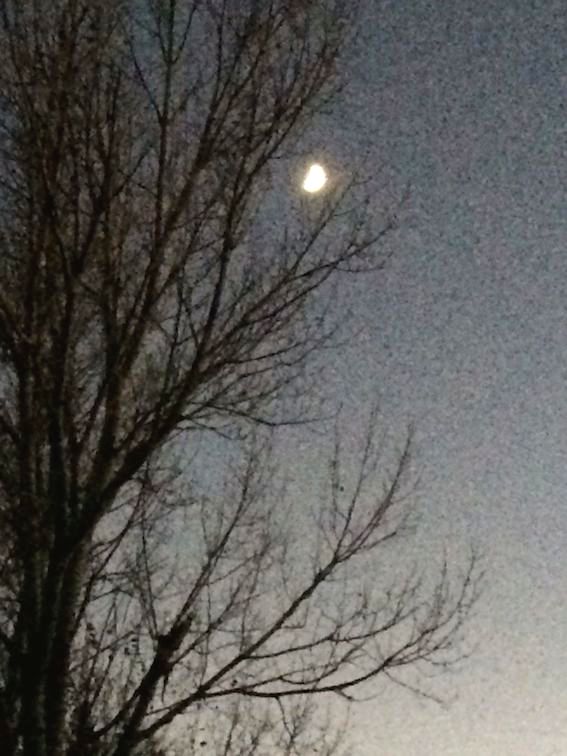
Night
Night

Winter night
his snore keeps her reflect
on the past blue;

the refugee
the rain gutter recites
the war poem;

lighted window
the night rain drums
in November;

artic dream
polar bear dreams of
old ice home.

©Byung A. Fallgren
 Byung A. Fallgren